}
HUMAN ACTIVITIES
Human activities are changing the climate
 Pollution due to vehicles
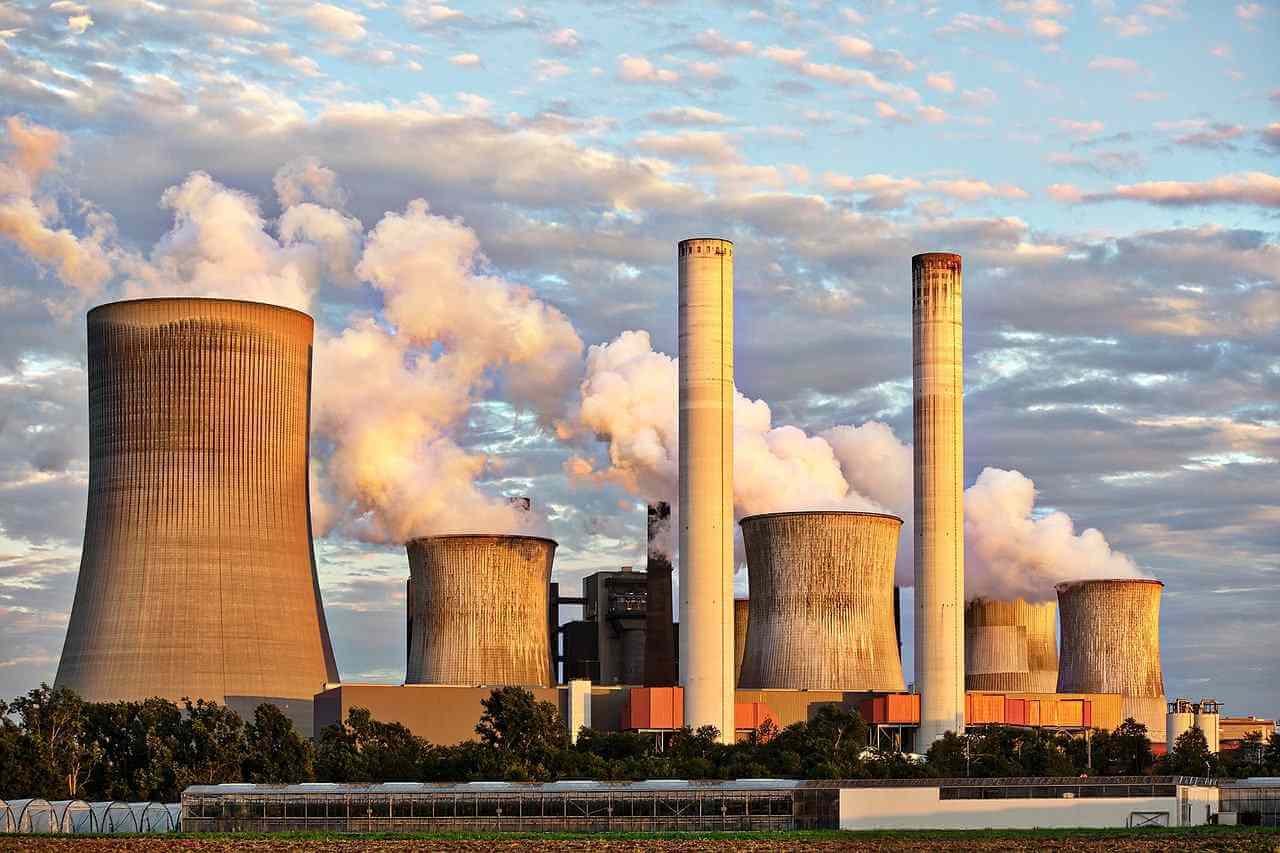
 Industrial Pollution
Rigorous analysis of all data and lines of evidence shows that most of the observed global warming over the past 50 years or so cannot be explained by natural causes and instead requires a significant role for the influence of human activities.
In order to discern the human influence on climate, scientists must consider many natural variations that affect temperature, precipitation, and other aspects of climate from local to global scale, on timescales from days to decades and longer. One natural variation is the El Niño Southern Oscillation (ENSO), an irregular alternation between warming and cooling (lasting about two to seven years) in the equatorial Pacific Ocean that causes significant year-to-year regional and global shifts in temperature and rainfall patterns. Volcanic eruptions also alter climate, in part increasing the amount of small (aerosol) particles in the stratosphere that reflect or absorb sunlight, leading to a short-term surface cooling lasting typically about two to three years. Over hundreds of thousands of years, slow, recurring variations in Earth’s orbit around the Sun, which alter the distribution of solar energy received by Earth, have been enough to trigger the ice age cycles of the past 800,000 years.
Fingerprinting is a powerful way of studying the causes of climate change. Different influences on climate lead to different patterns seen in climate records. This becomes obvious when scientists probe beyond changes in the average temperature of the planet and look more closely at geographical and temporal patterns of climate change. For example, an increase in the Sun’s energy output will lead to a very different pattern of temperature change (across Earth’s surface and vertically in the atmosphere) compared to that induced by an increase in CO2 concentration. Observed atmospheric temperature changes show a fingerprint much closer to that of a long-term CO2 increase than to that of a fluctuating Sun alone. Scientists routinely test whether purely natural changes in the Sun, volcanic activity, or internal climate variability could plausibly explain the patterns of change they have observed in many different aspects of the climate system. These analyses have shown that the observed climate changes of the past several decades cannot be explained just by natural factors.
The amount and rate of warming expected for the 21st century depends on the total amount of greenhouse gases that humankind emits. Models project the temperature increase for a business-as-usual emissions scenario (in red) and aggressive emission reductions, falling close to zero 50 years from now (in blue). Black is the modelled estimate of past warming. Each solid line represents the average of different model runs using the same emissions scenario, and the shaded areas provide a measure of the spread (one standard deviation) between the temperature changes projected by the different models. All data are relative to a reference period (set to zero) of 1986-2005. Source: Based on IPCC AR5
Nitin Saini ©